
















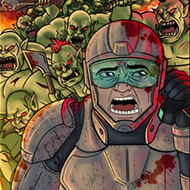

Papers, Please









What happens when the rule book changes overnight and you’ve already stamped three people through under yesterday’s regulations? That’s the entire tension of Papers, Please: an inspector’s booth at the border of the fictional country of Arstotzka, a stack of documents that keep gaining new fields to check, and a family at home who eats or doesn’t depending on how many people you process correctly today.
The Booth at Grestin: Papers, Please’s Core Loop
Every day plays out the same basic way: an applicant steps up to the checkpoint, hands over whatever documents they’re carrying, and the player has to decide whether everything lines up with the current day’s rule set before stamping APPROVED or DENIED. Early days only require checking a passport against a name and photo. Within a week that grows into cross-referencing entry permits, work passes, and ID cards against each other, checking expiration dates, and comparing a physical description against the person actually standing at the window.
Each correct decision earns a small amount of money, and each mistake — approving someone who should have been denied, or the reverse — costs a citation, with repeated citations cutting into pay for the day. That pay is the only thing standing between the inspector’s family and rent, food, and heat, so a slow, careful shift and a fast, sloppy one both carry real consequences by evening.
New inspectors tend to under-check early on, missing a mismatched issue city or an expired seal because the rule book hadn’t flagged it as new that day. The game rarely tells you outright what changed; noticing the difference yourself is most of the actual skill.
Documents, Tools, and What Actually Gets Checked
The inspection toolkit grows steadily across the game: a rule book that updates daily, a fingerprint scanner for cross-checking identity, a sequence scanner for weapons and contraband, a height scale mounted in the booth, and eventually a full body scanner. Each new tool adds another possible mismatch to catch, and by the later days a single applicant can require five or six separate checks before a stamp is justified either way.
Some applicants aren’t simple pass/fail cases at all. A recurring smuggler named Jorji Costava shows up repeatedly with increasingly bad forged documents, and how the player handles him — turn him away, report him, or wave him through — is one of the small threads that carries across multiple days rather than resetting each morning.
The EZIC organization contacts the inspector partway through the game, offering money in exchange for looking the other way on specific people or smuggling items through the checkpoint. Taking that offer or refusing it is one of the clearest forks in a game built almost entirely out of quieter, document-level decisions.
Twenty Endings and a Family That Doesn’t Reset
The family depending on the inspector’s income isn’t just a framing device sitting outside the gameplay. Their needs — rent, food, medicine, heat — actually change month to month, and running out of money for any of them has direct consequences that carry into the following days rather than just a game-over screen.
Papers, Please has roughly twenty different endings depending on choices made across the full run, most of them tied to how the player handled EZIC, the family’s situation, and a handful of specific applicants whose stories extend beyond a single booth interaction.
How many endings does Papers, Please have?
Around twenty, shaped by decisions made throughout the game — particularly involvement with EZIC and how specific recurring characters like Jorji Costava are handled.
What happens if you approve the wrong person in Papers, Please?
A mismatched document results in a citation. Citations stack over the course of a shift, and enough of them reduce the day’s pay, which puts direct pressure on rent, food, and heat for the inspector’s family.
Does the rule book change every day?
Yes — new fields, new document types, and new cross-checks get introduced regularly, and the game rarely announces exactly what’s different, so re-reading the current day’s rules carefully is necessary rather than optional.
Papers, Please turns a job most games wouldn’t bother simulating into its entire structure, and by the time Jorji Costava is back at the window with yet another badly forged passport, checking every seal and expiration date against a rule book that changed since yesterday feels less like paperwork and more like the whole point.
Comments
There are no reviews yet. Be the first one to write one.
