












Duo Survival 3
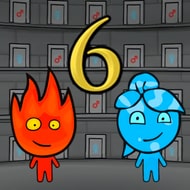





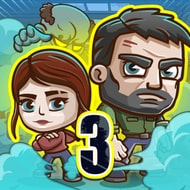
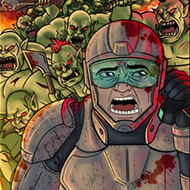
In Duo Survival 3 you start with two survivors, one built around fire and one around water, dropped at the edge of an overrun level with nothing but a kick and a thrown bottle between them and the horde behind. Whatever happens next depends on whether the two of you move together or apart.
One survivor is stronger and sturdier, able to push heavier objects and take a hit without going down, while the other is quicker and more agile, built for tight gaps and fast platforming. Beginners treat the two characters as interchangeable and send whichever one is closer to a switch, only to find the level needed the strong survivor holding a weight plate while the agile one slipped through a gap that closes back up seconds later. It’s a mistake players remember, which might explain the game’s more than 530,000 player votes across the portals hosting it.
Fire and Water Balance Duo Survival 3 Builds Every Puzzle Around
The fire-and-water split decides which hazards each survivor can walk through safely and which end a run instantly. Rooms are built so a hazard blocking one survivor is harmless to the other, so the puzzle is almost always about routing, not combat.
By the time a level pairs a weight plate with a gated path, hesitating over which survivor goes first costs you the run, since the zombie horde is on a timer rather than waiting in one fixed spot.
Players who lean on the kick-and-throw-bottle action purely for combat miss its other use, since a thrown bottle can also trigger a distant switch or knock loose an object neither survivor could reach.
Kicking, Throwing, and the Contraptions Duo Survival 3 Hides in Plain Sight
Movement uses A and D or the arrow keys, jumping is W or the up arrow, and S or the down arrow handles the kick-or-throw action, changing depending on what the survivor is standing near. Crawling through hidden rooms tucked behind ordinary-looking walls is where the game’s better contraptions hide, and completionists who backtrack usually find a shortcut that trivializes a later puzzle.
Solo players toggle between the fire and water survivor at will, which works but demands planning a sequence in advance rather than reacting the way two people sharing a keyboard naturally do.
Mechanisms that show up repeatedly include:
- Weight plates that stay active only while a survivor stands on them
- Gated paths that open once both survivors reach separate triggers
- Breakable barriers cleared with a thrown bottle or a well-timed kick
- Can you play Duo Survival 3 alone? Yes, solo players switch control between the fire and water survivor as needed, though every weight-plate puzzle has to be planned out since nobody is holding the second position for you.
- What is the objective in Duo Survival 3? The two survivors are working to find a cure and reach safety, which in practice means clearing each level’s puzzle sequence before the zombie horde catches up.
- What do the fire and water survivors actually do differently? One is stronger and can push heavy objects or shrug off hits, while the other is quicker and better suited to tight platforming, and most rooms only let one of them survive a given hazard.
Duo Survival 3 keeps its two survivors leaning on each other from the first weight plate to the last gated door, and once the kick-and-throw-bottle trick clicks as more than just crowd control, the fire-and-water routing puzzles stop feeling like an obstacle and start feeling like the actual game.
Comments
There are no reviews yet. Be the first one to write one.
