




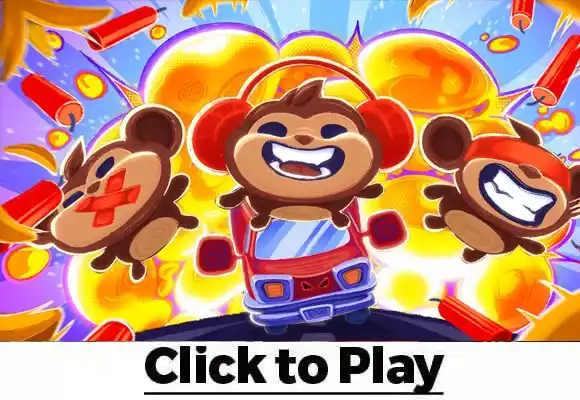
12 Mini Battles
What happens when a single button has to carry you through an axe duel, a tank fight, and a round of thumb wrestling inside the same few minutes? That’s the whole pitch behind 12 Mini Battles: one control scheme, dozens of wildly different contests, and barely enough time between them to figure out what just happened before the next one starts.
12 Mini Battles Runs on One Shared Button
Every mini-battle in the game, from Duel and Hand Slap Duel to Frog Tongue Frenzy and Boxing Brawl, runs on the same one-button input for each player. That sounds limiting until you sit down with someone and realize the challenge was never about button count, it’s about figuring out what a single press does differently in a soccer match versus a tank fight versus a round of golf. Some battles reward mashing as fast as possible, others punish anyone who doesn’t wait for the right moment to press.
Beginners tend to spam the button on every mini-battle out of habit, which works fine in something like Thumb Wrestling and gets them destroyed in something like Hole-in-One Challenge, where timing one press matters far more than speed.
The 36 mini-battles span a few recognizable categories:
- Sports contests like Tennis Rally, Basketball Battle, and Soccer Random
- Reaction duels like Axe Battle, Mace Battle, and the original Duel
- Vehicle fights like Tanks and Firefighter Helicopter
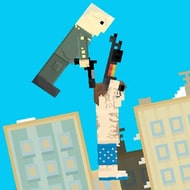
- Physics chaos like Wrestling, Board Breaker, and Lava Leap
No Real Solo Mode in 12 Mini Battles
The game is built for two people on one keyboard, player one on the A key and player two on the L key, nothing more. There’s no controller to configure and no menu to dig through before a round starts, which is exactly why it works as a quick couch game rather than something you sit down to seriously practice.
What catches people off guard is that there’s no real single-player mode against a computer opponent. If nobody’s around to play, you’re expected to control both sides yourself, tapping A and L in turn. It works as a way to learn every mini-battle’s timing, but it’s also one of the few things players genuinely complain about.
Cycling Through the Mini-Battles
A session moves fast because the game never lingers on a single contest. A handful of the battles you’ll run into over a normal run:
- Duel, a straight reaction-time face-off
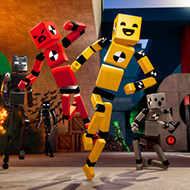
- Wrestling, ragdoll physics with no clean counterplay
- Tanks, where positioning matters more than reflexes
- Rescue Mission, a scramble against the clock
- Golf, where a single mistimed press overshoots everything
Once Wrestling or Board Breaker rolls around, a round stops being about reflexes and starts being about who exploits the physics engine’s quirks first, which is a different skill entirely from the reaction-time duels earlier in a session.
Reflex Duels vs Physics Chaos
Players who only trained on Duel-style reaction battles often stall out the moment a physics-based mini-battle shows up, because the same single button suddenly controls momentum instead of one clean action. Competitive players tend to specialize in a handful of battles like Boxing Brawl or Axe Battle, where a short reaction window means practice genuinely shows, while more casual players just want the chaos of not knowing whether the next round is Frog Tongue Frenzy or Martian Shooter. Losing a bad battle to a physics fluke rarely feels final when the next one starts within seconds.
12 Mini Battles never tries to be deep in any single mini-battle; the appeal is entirely in how fast it moves between Frog Tongue Frenzy, Tanks, and Scrimmage without ever giving either player time to settle into a routine.
Comments
There are no reviews yet. Be the first one to write one.
